45 Magnetorquers
from
15 Manufacturers
45 Products
from
15 Manufacturers
Page 1 of 3
What are Magnetorquers?
Magnetorquers are electromagnetic attitude control actuators that generate control torque through interaction with a planetary magnetic field. They consist of current-driven coils or magnetic rods that produce a controllable magnetic dipole moment. When energized, the generated dipole interacts with the ambient geomagnetic field, producing a torque equal to the cross product of the dipole moment and the local magnetic flux density. This mechanism enables propellant-free attitude stabilization and momentum management in spacecraft operating within magnetized environments.
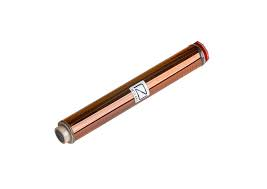
In satellite attitude determination and control subsystems, magnetorquers are commonly used for detumbling after deployment, reaction wheel momentum unloading, coarse pointing, and low-disturbance control. Their performance depends on orbital altitude, local magnetic field strength, and spacecraft inertia properties. Magnetorquers are typically integrated as single-axis or multi-axis assemblies to provide three-axis control authority when combined with appropriate control algorithms and onboard magnetic field measurements.
Key specifications of Magnetorquer -
- Satellite Type: This parameter defines the class and mission profile of the spacecraft for which the magnetorquer is intended. Satellite type influences structural integration, environmental qualification, redundancy philosophy, and control architecture. Power availability, allowable electromagnetic emissions, and disturbance sensitivity vary across satellite classes and directly impact magnetorquer sizing and configuration.
- Axis: The axis specification indicates whether the magnetorquer provides control along a single axis or as part of a multi-axis configuration. Axis arrangement determines the achievable control torque vector orientation relative to the spacecraft body frame. Multi-axis systems enable full three-axis control, while single-axis devices are typically combined in orthogonal configurations to achieve complete attitude authority.
- Accuracy: Accuracy refers to the precision with which the generated magnetic dipole moment can be commanded and controlled. It affects torque predictability and closed-loop attitude performance. Higher accuracy reduces control error, improves detumbling convergence, and minimizes residual pointing deviations, particularly in fine stabilization modes.
- Range: Range defines the controllable span of the magnetic dipole moment output. It determines the actuator’s ability to respond to varying disturbance torques and different magnetic field strengths along the orbit. Adequate range ensures effective momentum unloading and stabilization across mission phases with differing dynamic conditions.
- Magnetic Gain: Magnetic gain represents the proportional relationship between input command signal and resulting magnetic dipole output. It influences control loop tuning, responsiveness, and stability margins. Proper gain characteristics are essential to ensure predictable torque generation and compatibility with spacecraft attitude control algorithms.
- Dipole Moment: The dipole moment is the fundamental output parameter of a magnetorquer and quantifies the strength of the generated magnetic field. It directly determines the maximum achievable control torque in a given ambient magnetic environment. Dipole moment capability must be matched to spacecraft inertia properties and expected disturbance torques to ensure sufficient control authority.
- Supply Voltage: Supply voltage defines the electrical input required to drive the magnetorquer coils or rods. It affects current draw, power consumption, and thermal dissipation within the actuator. Compatibility with the spacecraft power bus and regulation architecture is essential to ensure stable operation without introducing electrical noise or overloading the power subsystem.
- Interface: The interface parameter encompasses mechanical mounting provisions, electrical power connections, command and telemetry communication, and thermal coupling to the spacecraft structure. Mechanical interfaces must withstand launch loads and vibration, while electrical interfaces must align with onboard data handling and power systems. Proper interface definition ensures reliable integration into the spacecraft’s attitude determination and control subsystem.
The Largest Database of Magnetorquers
SatNow has listed Magnetorquers from the leading manufacturers and made them searchable by specification. You can enter the key parameters and the search tool will scan catalogs from the leading manufacturers to identify products that meet your spec. Once you find Magnetorquers that meet your requirement, you can view product information, download datasheets or request quotations. Quotation requests will be routed to the manufacturer of the product who will get back to you directly. The quotation will also be routed to distributors of the product in your region.
